
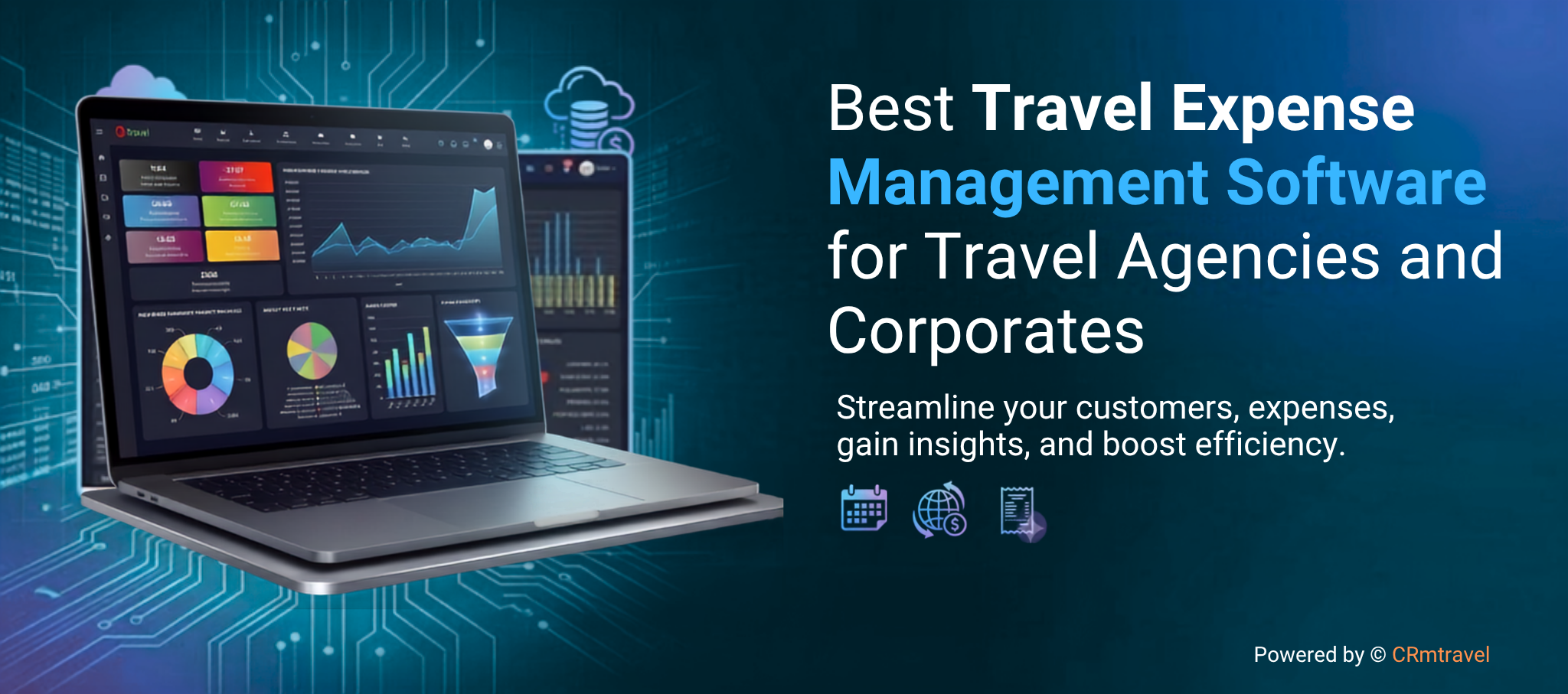
Managing travel expenses is one of the most time-consuming, error-prone tasks that travel agencies and corporate finance teams face. From tracking flight costs and hotel bookings to processing receipts and generating compliance reports, the manual approach is simply no longer sustainable. That's where travel expense management software steps in — transforming a fragmented, paper-heavy workflow into a streamlined, data-driven process.
Whether you're running a mid-sized travel agency or managing corporate travel for a multinational company, choosing the right tool can save thousands of dollars annually while dramatically improving operational efficiency. In this guide, we break down the best travel expense management software available in 2026, the features you should prioritise, and how to select the perfect fit for your organisation.
What Is Travel Expense Management Software?
Travel expense management software is a digital platform that automates the process of tracking, submitting, approving, and reimbursing travel-related expenses. These tools integrate with booking systems, corporate credit cards, accounting software, and ERP platforms to give finance teams complete visibility over every rupee or dollar spent on business travel.
For travel agencies, this software enables better client billing accuracy, multi-currency reconciliation, and real-time reporting. For corporates, it enforces spending policies, accelerates reimbursement cycles, and provides actionable data for budget planning.
Key Features to Look For
Before diving into specific tools, here are the non-negotiable features any reliable travel expense management solution should offer:
◼ Automated Receipt Capture — OCR-powered scanning to digitise paper receipts instantly
◼ Multi-Currency Support — Essential for international travel and cross-border transactions
◼ Policy Enforcement Engine — Flags out-of-policy spending before reimbursement
◼ ERP & Accounting Integration — Seamless sync with QuickBooks, SAP, Xero, Tally, and similar platforms
◼ Real-Time Analytics & Dashboards — Instant visibility into spending trends by department, employee, or project
◼ Mobile Application — On-the-go expense submission for travelling employees
◼ Approval Workflow Automation — Multi-level approval chains without manual follow-ups
◼ Audit Trail & Compliance Reports — Critical for tax filing and regulatory compliance
Best Travel Expense Management Software
CRMtravel™ — Built for Travel Businesses
CRMtravel™ is the only travel expense management platform purpose-built for the unique workflows of travel agencies and corporate travel departments. Unlike generic expense tools, CRMtravel™ understands the full travel transaction lifecycle — from initial client inquiry and booking to vendor invoicing and final reconciliation.
What makes CRMtravel™ different:
◼ Travel-Specific Expense Categories — Pre-configured for flights, hotels, transfers, visa fees, travel insurance, and more
◼ Client Billing Integration — Directly links agent expenses to client itineraries for accurate, dispute-free billing
◼ GST & TDS Ready — Fully compliant with Indian tax regulations, including HSN/SAC code mapping
◼ B2B & B2C Expense Handling — Manages both corporate client accounts and individual traveller reimbursements from a single dashboard
◼ Integrated CRM Data — Expense reports tie directly to customer profiles, bookings, and sales pipelines within the CRMtravel™ ecosystem
Best For: Travel agencies of all sizes, DMCs, corporate travel desks, and OTAs
Standout Feature: The only platform that links travel expense data directly to your CRM, bookings, and client revenue reports — giving you a 360° financial picture with zero manual data entry.
How to Choose the Right Software for Your Business
With strong options across the market, your decision should come down to four key dimensions:
1. Industry Fit — Generic tools handle basic expense workflows, but travel agencies need software that understands booking structures, vendor types, and client-side billing. CRMtravel™ is purpose-engineered for exactly this.
2. Compliance Alignment — Indian businesses must ensure their chosen platform supports GST filing, TDS reconciliation, and multi-state tax handling natively — not through workarounds.
3. Integration Depth — Your expense tool should connect seamlessly with your existing CRM, accounting software, and booking engine. Silos between systems create data errors and slow down reconciliation.
4. Scalability — Choose a platform that grows with your agency or corporate travel programme. The cost of migrating systems later far outweighs any short-term savings from an under-powered solution.
