
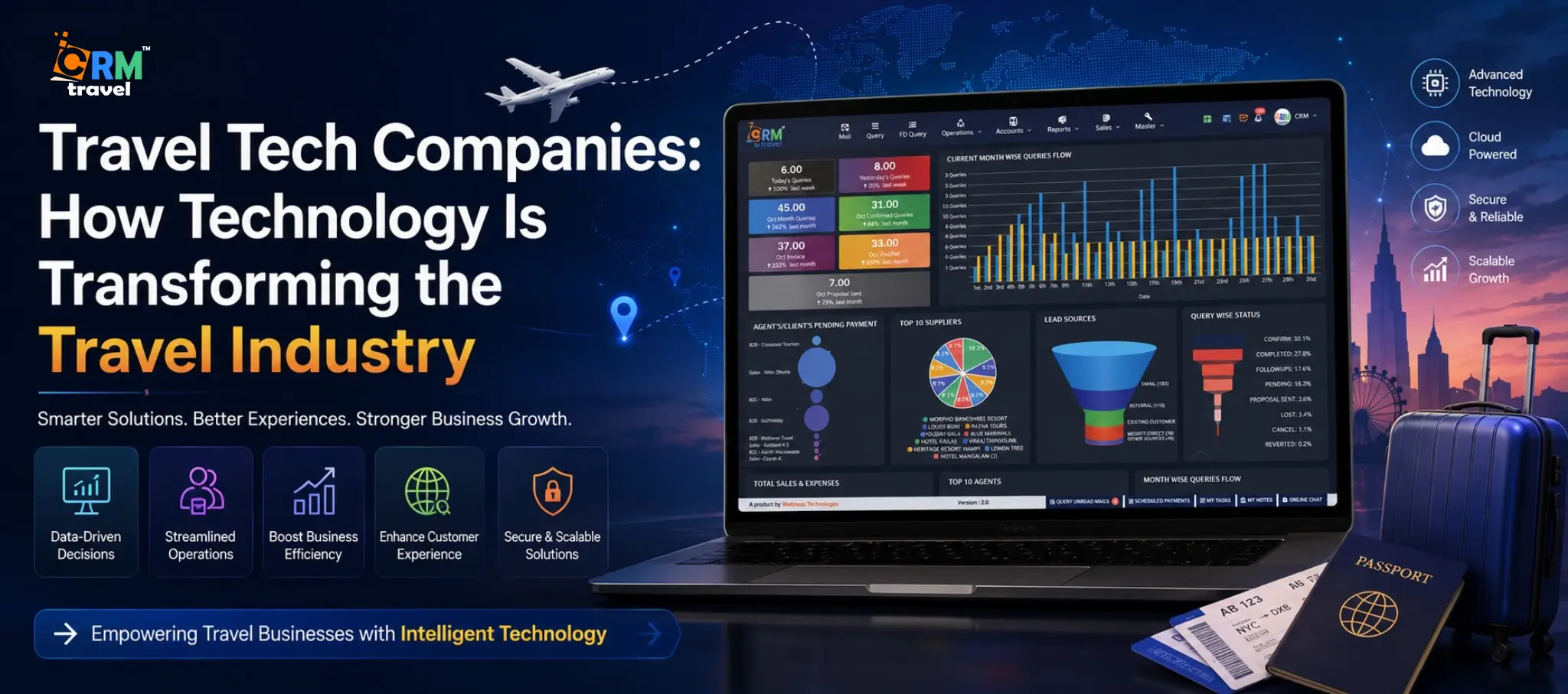
The travel industry has always evolved alongside technology, but the pace of innovation in recent years has been remarkable. Travelers now expect instant bookings, personalized recommendations, digital payments, mobile access, and real-time support. Meeting these expectations is nearly impossible without the right technology.
This is where travel tech companies play a crucial role.
Rather than simply providing software, these companies help travel agencies, tour operators, destination management companies (DMCs), corporate travel managers, and online travel businesses automate operations, improve customer experiences, and increase profitability. Whether you're a startup travel agency or a well-established enterprise, investing in travel technology has become a necessity rather than an option. Businesses that embrace digital transformation are reducing operational costs, increasing productivity, and delivering better services to customers worldwide.
In this guide, we'll explore what travel tech companies do, why they matter, the technologies shaping the future of travel, and how to choose the right technology partner for your business.
What Are Travel Tech Companies?
Travel tech companies are businesses that develop software and digital solutions specifically for the travel and tourism industry. Their products help travel businesses manage daily operations, automate repetitive tasks, improve customer engagement, and simplify booking processes.
Instead of relying on spreadsheets, manual documentation, phone calls, and disconnected systems, travel businesses can operate through a centralized digital platform.
Depending on business requirements, travel technology companies provide solutions such as:
- ◼ Travel CRM Software
- ◼ B2B Travel Portals
- ◼ B2C Booking Engines
- ◼ Corporate Travel Management Systems
- ◼ Tour Operator Software
- ◼ Visa Management Software
- ◼ Hotel Reservation Systems
- ◼ Flight Booking Integration
- ◼ Accounting & Finance Modules
- ◼ Customer Communication Platforms
- ◼ Mobile Applications
- ◼ Reporting & Analytics Dashboards
These solutions allow travel companies to manage every stage of the customer journey—from inquiry and quotation to booking, payment, travel documentation, and post-trip support.
Why Travel Technology Is More Important Than Ever
Today's travelers expect convenience at every step of their journey. They compare prices online, book through mobile devices, make digital payments, and expect immediate confirmations.
At the same time, travel businesses face increasing competition, rising operational costs, and growing customer expectations. Technology bridges this gap. Instead of spending hours preparing quotations manually, travel agencies can generate professional itineraries within minutes. Instead of following up with customers individually, automated CRM systems can send reminders, payment notifications, and travel updates automatically. Instead of maintaining separate spreadsheets for hotels, flights, and customer information, everything can be managed through one integrated platform. Technology isn't replacing travel professionals—it enables them to focus on building relationships and delivering exceptional travel experiences.
Key Services Offered by Travel Tech Companies
Modern travel technology companies develop a wide range of solutions designed to simplify business operations.
1. Travel CRM Software
Customer relationship management has become one of the most valuable tools for travel agencies.
A Travel CRM helps businesses:
- ◼ Track customer inquiries
- ◼ Store traveler information securely
- ◼ Manage quotations
- ◼ Follow up on leads automatically
- ◼ Send personalized offers
- ◼ Monitor sales performance
- ◼ Improve customer retention
Instead of losing potential clients due to delayed responses, travel businesses can nurture leads efficiently through automated workflows.
2. B2B Travel Portals
B2B travel software enables travel wholesalers, consolidators, and agencies to work together through a secure online platform.
Key features include:
- ◼ Agent registration
- ◼ Wallet management
- ◼ Credit limits
- ◼ Commission management
- ◼ Supplier integrations
- ◼ Real-time inventory
- ◼ Online booking
This significantly reduces manual coordination between agencies and suppliers.
3. B2C Online Booking Platforms
Today's travelers prefer booking online rather than visiting physical offices.
Travel technology companies build booking platforms where customers can:
- ◼ Search travel packages
- ◼ Compare prices
- ◼ Book hotels
- ◼ Reserve flights
- ◼ Make secure payments
- ◼ Download invoices
- ◼ Track bookings
A seamless booking experience often leads to higher conversion rates and improved customer satisfaction.
4. Corporate Travel Management Software
Managing business travel involves more than booking flights.
Corporate travel software helps organizations:
- ◼ Enforce travel policies
- ◼ Manage employee bookings
- ◼ Track travel expenses
- ◼ Approve trips digitally
- ◼ Generate reports
- ◼ Monitor travel budgets
This improves compliance while reducing unnecessary travel expenses.
5. Tour Operator Management Systems
Tour operators manage multiple components for every trip, including hotels, transportation, sightseeing, guides, and customer communications. Modern software centralizes these operations into a single dashboard, making itinerary planning faster and reducing the chances of errors.
Technologies Driving Modern Travel Tech Companies
The travel industry has become one of the fastest adopters of emerging technologies. Here are some innovations transforming travel businesses in 2026.
⚡ Artificial Intelligence (AI)
AI is helping travel companies deliver personalized experiences by analyzing customer preferences and booking history.
AI-powered tools can:
- ◼ Recommend destinations
- ◼ Suggest travel packages
- ◼ Predict customer behavior
- ◼ Automate customer support
- ◼ Generate quotations
- ◼ Improve lead management
Businesses using AI are responding to customer inquiries faster while increasing booking conversions.
⚡ Cloud Computing
Cloud-based travel software allows businesses to access their systems from anywhere. Whether employees work remotely, travel frequently, or operate multiple branches, cloud technology ensures secure access to real-time information.
Benefits include:
- ◼ Automatic backups
- ◼ Better security
- ◼ Lower infrastructure costs
- ◼ Faster collaboration
- ◼ Easy scalability
⚡ Automation
Automation eliminates repetitive administrative work.
Instead of manually performing daily tasks, software can automatically:
- ◼ Send booking confirmations
- ◼ Generate invoices
- ◼ Follow up on leads
- ◼ Schedule reminders
- ◼ Process payments
- ◼ Update booking statuses
This allows travel consultants to focus on sales and customer relationships.
⚡ Mobile Technology
Most travelers now research and book trips using smartphones.
Travel technology companies are investing heavily in mobile applications that allow customers to:
- ◼ Book trips
- ◼ View itineraries
- ◼ Receive travel alerts
- ◼ Upload documents
- ◼ Contact support
- ◼ Make secure payments
Mobile accessibility has become a standard expectation rather than a competitive advantage.
Benefits of Working with Travel Tech Companies
Partnering with the right travel technology provider offers significant advantages beyond operational efficiency. Some of the biggest benefits include:
➖ Improved Productivity
Automation reduces manual work, allowing employees to handle more bookings without increasing workload.
➖ Better Customer Experience
Fast responses, personalized recommendations, and seamless booking processes lead to happier customers and stronger loyalty.
➖ Increased Revenue
Advanced CRM systems help businesses convert more leads into paying customers while encouraging repeat bookings through targeted marketing.
➖ Lower Operational Costs
Automation reduces paperwork, minimizes human errors, and eliminates repetitive administrative tasks, leading to long-term cost savings.
➖ Better Business Insights
Modern dashboards provide valuable analytics on sales performance, customer behavior, booking trends, and revenue, helping businesses make smarter decisions based on real data.
How to Choose the Best Travel Tech Company
Selecting the right travel tech company is one of the most important decisions for any travel business. The software you choose will influence how efficiently you manage bookings, serve customers, and scale your operations. While many providers offer similar features, the best solution is one that aligns with your business goals, budget, and future growth plans.
Here are the key factors to consider before making your decision.
1. Understand Your Business Requirements
Start by identifying the challenges your business faces. Different travel businesses have different operational needs.
For example:
- ◼ A travel agency may need lead management, quotations, and customer follow-ups.
- ◼ A tour operator may require itinerary creation, package management, and supplier coordination.
- ◼ A corporate travel company may focus on travel policy enforcement, expense management, and employee bookings.
- ◼ A B2B travel business may need agent registration, wallet management, and commission tracking.
Choosing software designed specifically for your business model ensures you only pay for features that add value.
2. Look for an All-in-One Solution
Managing multiple software applications can be expensive and inefficient. A comprehensive travel management platform brings all essential functions into one centralized dashboard.
Look for software that includes:
- ◼ Customer Relationship Management (CRM)
- ◼ B2B and B2C booking portals
- ◼ Flight, hotel, and holiday package management
- ◼ Visa management
- ◼ Accounting and invoicing
- ◼ Payment gateway integration
- ◼ Reporting and analytics
- ◼ Marketing automation
An integrated solution improves productivity and reduces the need for manual data entry.
3. Prioritize Ease of Use
Even the most powerful software won't deliver value if it's difficult to use. Choose a platform with an intuitive interface that allows your team to learn quickly and work efficiently. A user-friendly system helps reduce training time, minimizes errors, and encourages faster adoption across your organization.
4. Check Customization Options
Every travel business has unique workflows. Your software should be flexible enough to adapt to your processes rather than forcing you to change how you work.
Look for customization features such as:
- ◼ Branded quotations and invoices
- ◼ Custom booking workflows
- ◼ Personalized email templates
- ◼ Configurable user roles and permissions
- ◼ Tailored reports and dashboards
A customizable platform can grow alongside your business.
5. Ensure Third-Party Integrations
Modern travel businesses rely on multiple systems working together. The right travel tech company should support integrations with:
- ◼ Flight booking APIs
- ◼ Hotel suppliers
- ◼ Payment gateways
- ◼ Accounting software
- ◼ SMS and email providers
- ◼ Maps and location services
- ◼ Marketing platforms
Seamless integrations eliminate duplicate work and improve operational efficiency.
6. Choose Cloud-Based Software
Cloud-based travel software provides greater flexibility than traditional on-premise systems.
Benefits include:
- ◼ Access from anywhere
- ◼ Automatic software updates
- ◼ Enhanced data security
- ◼ Real-time collaboration
- ◼ Easy scalability
- ◼ Lower infrastructure costs
Cloud technology also makes it easier to support remote teams and multiple office locations.
7. Evaluate Security and Data Protection
Travel businesses handle sensitive customer information, including passports, payment details, and travel documents. Strong security measures are essential.
Look for features such as:
- ◼ Secure user authentication
- ◼ Role-based access control
- ◼ Regular data backups
- ◼ Encrypted data transmission
- ◼ Compliance with relevant data protection regulations
Protecting customer data builds trust and reduces business risk.
8. Review Customer Support
Reliable support is just as important as the software itself. When technical issues arise, quick assistance can prevent disruptions to your business.
Before choosing a provider, check:
- ◼ Support availability and response times
- ◼ Multiple support channels (phone, email, chat)
- ◼ Onboarding and training services
- ◼ Documentation and knowledge base
- ◼ Customer reviews and testimonials
A responsive support team can make a significant difference to your day-to-day operations.
9. Consider Scalability
Your business today may be very different from your business three years from now. Choose software that can grow with you.
A scalable platform should support:
- ◼ More users and branches
- ◼ Higher booking volumes
- ◼ Additional products and services
- ◼ New supplier integrations
- ◼ International expansion
- ◼ Advanced reporting and automation
Investing in scalable technology reduces the need for costly system migrations later.
10. Compare Pricing and Return on Investment
Price should not be the only deciding factor. Instead, evaluate the overall value the software delivers.
Ask questions such as:
- ◼ Will it reduce manual work?
- ◼ Can it improve lead conversion?
- ◼ Will it increase booking efficiency?
- ◼ Does it help reduce operational costs?
- ◼ Can it improve customer satisfaction?
The right travel technology solution should deliver measurable improvements in productivity and profitability, making it a worthwhile long-term investment.
Top Features to Look for in a Travel Tech Platform
The right travel technology platform should do more than automate routine tasks—it should help your business operate efficiently, deliver exceptional customer experiences, and support long-term growth. Whether you're a travel agency, tour operator, destination management company (DMC), or corporate travel business, these are the essential features to look for when evaluating a travel tech solution.
1. Customer Relationship Management (CRM)
A built-in CRM is the backbone of any modern travel business. It enables you to manage leads, store customer information, track interactions, and build stronger relationships with travelers.
Key CRM capabilities include:
- ◼ Lead capture and tracking
- ◼ Customer profiles and booking history
- ◼ Automated follow-ups
- ◼ Task and reminder management
- ◼ Sales pipeline monitoring
- ◼ Customer segmentation
An integrated CRM ensures no inquiry is missed and helps convert more leads into bookings.
2. Online Booking Engine
A powerful booking engine allows customers to search, compare, and book travel services online with ease.
Look for features such as:
- ◼ Real-time availability
- ◼ Instant booking confirmation
- ◼ Dynamic pricing
- ◼ Secure payment processing
- ◼ Mobile-friendly interface
- ◼ Multi-currency and multilingual support
A seamless booking experience improves customer satisfaction and increases conversion rates.
3. B2B and B2C Portal Management
If your business serves both travel agents and direct customers, choose software that supports separate B2B and B2C portals.
Essential features include:
- ◼ Agent registration and login
- ◼ Commission management
- ◼ Wallet and credit limit management
- ◼ Customer self-service portal
- ◼ Distributor pricing
- ◼ Role-based access controls
This enables you to manage multiple sales channels from a single platform.
4. Itinerary and Package Builder
Creating customized travel itineraries manually can be time-consuming. An itinerary builder helps you design professional travel plans quickly.
The best solutions offer:
- ◼ Drag-and-drop itinerary creation
- ◼ Day-wise scheduling
- ◼ Hotel, flight, and activity integration
- ◼ Branded PDF generation
- ◼ Cost calculations
- ◼ Easy editing and sharing
This feature enhances professionalism while saving valuable time.
5. Quotation and Invoice Management
Generating accurate quotations and invoices should take minutes, not hours.
Look for:
- ◼ Automated quotation generation
- ◼ Custom pricing rules
- ◼ GST and tax calculations
- ◼ Professional invoice templates
- ◼ Digital payment links
- ◼ Quote approval tracking
Fast and accurate quotations improve customer response times and increase booking opportunities.
6. Supplier and Inventory Management
Managing suppliers efficiently is essential for delivering quality travel services.
Choose a platform that supports:
- ◼ Hotel and transport supplier management
- ◼ Contract storage
- ◼ Supplier rate management
- ◼ Inventory tracking
- ◼ Vendor performance monitoring
- ◼ Purchase records
Centralized supplier management reduces administrative effort and improves operational control.
7. API Integrations
A modern travel platform should integrate seamlessly with third-party services.
Common integrations include:
- ◼ Flight booking APIs
- ◼ Hotel booking APIs
- ◼ Car rental providers
- ◼ Payment gateways
- ◼ Accounting software
- ◼ SMS and email platforms
- ◼ Maps and geolocation services
These integrations automate workflows and provide a better customer experience.
8. Automation Tools
Automation helps eliminate repetitive tasks and improves overall efficiency.
Look for features like:
- ◼ Automated follow-up emails
- ◼ Booking confirmations
- ◼ Payment reminders
- ◼ Travel document notifications
- ◼ Task scheduling
- ◼ Customer feedback requests
Automation allows your team to focus on sales and customer service instead of routine administrative work.
9. Reporting and Analytics
Data-driven insights are essential for making informed business decisions.
A robust reporting module should provide:
- ◼ Sales performance reports
- ◼ Revenue tracking
- ◼ Lead conversion analysis
- ◼ Booking trends
- ◼ Customer behavior insights
- ◼ Employee performance metrics
Real-time dashboards help identify growth opportunities and improve business strategy.
10. Mobile Accessibility
With travel professionals and customers constantly on the move, mobile accessibility is no longer optional.
Look for software that offers:
- ◼ Responsive web design
- ◼ Mobile apps for Android and iOS
- ◼ Booking management on mobile
- ◼ Push notifications
- ◼ Mobile document uploads
- ◼ Real-time travel updates
Mobile access improves productivity and keeps both staff and customers connected.
11. Secure Payment Integration
A secure payment system simplifies transactions and builds customer trust.
Important capabilities include:
- ◼ Multiple payment gateways
- ◼ Credit and debit card support
- ◼ UPI and digital wallet compatibility
- ◼ International payment options
- ◼ Automated payment reconciliation
- ◼ Refund management
Providing flexible payment options can improve the booking experience and reduce abandoned transactions.
12. Security and Data Protection
Travel businesses manage sensitive customer information, making security a top priority.
Look for features such as:
- ◼ Role-based user permissions
- ◼ Two-factor authentication (2FA)
- ◼ Data encryption
- ◼ Regular backups
- ◼ Audit logs
- ◼ Compliance with data privacy regulations
Strong security measures protect both your business and your customers.
13. Marketing and Communication Tools
Built-in marketing tools help you stay connected with customers and encourage repeat bookings.
Useful features include:
- ◼ Email marketing campaigns
- ◼ SMS and WhatsApp notifications
- ◼ Promotional offers
- ◼ Customer segmentation
- ◼ Review and feedback collection
- ◼ Loyalty and referral programs
Effective communication strengthens customer relationships and boosts retention.
14. Cloud-Based Infrastructure
Cloud-based travel software offers flexibility, scalability, and reliability.
Benefits include:
- ◼ Access from anywhere
- ◼ Automatic software updates
- ◼ Lower maintenance costs
- ◼ Easy scalability
- ◼ Real-time collaboration
- ◼ Business continuity through secure backups
Cloud solutions are ideal for growing travel businesses with multiple users or locations.
Future Trends in Travel Technology
The travel industry is entering a new era where technology is not just supporting business operations—it is redefining how people plan, book, and experience travel. As customer expectations continue to evolve, travel businesses that embrace innovation will be better positioned to stay competitive, improve operational efficiency, and deliver exceptional customer experiences.
Here are some of the most important travel technology trends shaping the future of the industry.
1. Artificial Intelligence Will Become the Standard
Artificial Intelligence (AI) is rapidly becoming an essential part of modern travel technology. Instead of simply automating repetitive tasks, AI is helping businesses make smarter decisions and provide more personalized experiences.
In the coming years, AI-powered travel platforms will be able to:
- ◼ Recommend destinations based on traveler preferences
- ◼ Generate personalized holiday packages
- ◼ Predict customer behavior and booking patterns
- ◼ Automate lead qualification
- ◼ Provide intelligent pricing recommendations
- ◼ Offer 24/7 AI-powered customer support
As AI continues to improve, travel agencies will be able to deliver faster service while reducing manual effort and operational costs.
2. Hyper-Personalized Travel Experiences
Modern travelers expect recommendations tailored to their interests rather than generic travel packages. Future travel software will use customer data, previous bookings, browsing history, and preferences to create highly personalized travel experiences. This could include suggesting destinations based on past trips, recommending activities that match individual interests, or offering exclusive promotions relevant to each traveler. Personalization will not only improve customer satisfaction but also increase conversion rates and encourage repeat bookings.
3. Voice Search and Conversational Booking
Voice assistants are changing how people search for information online. As voice technology becomes more advanced, travelers will increasingly use voice commands to search for destinations, compare prices, and make bookings. Travel businesses that optimize their websites and booking platforms for voice search will be better prepared to meet changing customer behaviors and capture more organic traffic.
4. Automation Across the Entire Customer Journey
Automation will continue to streamline every stage of the travel process.
Future travel management platforms will automatically:
- ◼ Capture and assign new leads
- ◼ Send personalized quotations
- ◼ Confirm bookings instantly
- ◼ Issue invoices and receipts
- ◼ Send travel reminders
- ◼ Collect customer feedback after trips
- ◼ Launch targeted marketing campaigns
By reducing repetitive administrative tasks, businesses can focus more on building relationships and delivering exceptional customer service.
5. Cloud-Based Travel Platforms Will Dominate
Cloud technology has already transformed the way travel businesses operate, and its adoption will continue to grow. Cloud-based platforms allow travel agencies, tour operators, and corporate travel managers to access their systems from anywhere, collaborate in real time, and scale their operations without investing in expensive infrastructure. Future cloud solutions will offer greater flexibility, stronger security, and seamless software updates, making them the preferred choice for businesses of all sizes.
6. Mobile-First Travel Experiences
Smartphones have become the primary device for researching and booking travel. As mobile usage continues to increase, travel technology providers are placing greater emphasis on mobile-first experiences.
Future travel apps will enable users to:
- ◼ Search and book trips instantly
- ◼ Access digital itineraries
- ◼ Receive real-time travel alerts
- ◼ Store travel documents securely
- ◼ Make contactless payments
- ◼ Chat with customer support on the go
Businesses that prioritize mobile accessibility will be better equipped to meet the expectations of modern travelers.
7. Advanced Data Analytics for Smarter Decisions
Data is becoming one of the most valuable assets in the travel industry. Advanced analytics tools will help businesses gain deeper insights into customer behavior, booking trends, seasonal demand, and revenue performance. With real-time reporting and predictive analytics, travel companies can make more informed decisions, optimize pricing strategies, identify growth opportunities, and improve overall business performance.
8. Contactless and Digital Travel Experiences
The demand for contactless services continues to grow as travelers seek faster, safer, and more convenient experiences.
Travel technology will increasingly support:
- ◼ Digital check-ins
- ◼ E-tickets and digital boarding passes
- ◼ QR code-based travel documents
- ◼ Contactless hotel access
- ◼ Mobile payment solutions
- ◼ Digital identity verification
These innovations simplify the travel experience while reducing manual processes.
9. Cybersecurity and Data Privacy Will Take Center Stage
As travel businesses collect and store more customer information, protecting that data becomes increasingly important.
Future travel platforms will invest heavily in:
- ◼ Multi-factor authentication (MFA)
- ◼ End-to-end data encryption
- ◼ Secure cloud storage
- ◼ Continuous security monitoring
- ◼ Fraud detection systems
- ◼ Compliance with international data protection regulations
Strong cybersecurity measures will help businesses build customer trust and safeguard sensitive information.
10. Sustainable Travel Technology
Sustainability is becoming a major consideration for travelers and businesses alike. Travel technology will play a key role in helping companies reduce their environmental impact.
Future platforms may include features such as:
- ◼ Carbon footprint calculators
- ◼ Eco-friendly travel recommendations
- ◼ Paperless booking and invoicing
- ◼ Sustainable accommodation filters
- ◼ Emissions reporting for corporate travel
- ◼ Green travel policy management
These tools will support businesses in meeting sustainability goals while appealing to environmentally conscious travelers.
